
Secretary of State Marco Rubio told Congress that Cuba has armed and funded leftist terror groups aimed at America for more than sixty years.
Story Snapshot
- Secretary of State Marco Rubio testified Cuba has backed violent leftist terror groups across the Western Hemisphere for decades.
- Rubio told the Senate Foreign Relations Committee that Cuba still runs intelligence facilities for China and Russia.
- A State Department report accuses Havana of recruiting American activists and fueling left-wing terrorism inside the United States.
- Rubio blasted past U.S. outreach to Cuba, including meetings with Raul Castro’s grandson, as naive.
- Cuba’s government calls Rubio a liar, and some outside analysts question whether the newest spy-base claims hold up.
Rubio Details Decades of Cuban-Backed Terror
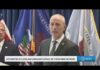
Secretary of State Marco Rubio testified before the Senate Foreign Relations Committee on June 2, 2026. He said “almost all radical, violent, leftist terrorist groups in the Western Hemisphere have relied at some point on support from Cuba.” He named the National Liberation Army and dissident factions of the Revolutionary Armed Forces of Colombia as direct examples.
Rubio’s family fled communist Cuba, and he has built his career opposing the Castro regime. His testimony was not a one-off remark. It built on a State Department report released weeks earlier that called Cuba the “capital of 21st-century communism” and accused Havana of running a decades-long “campaign of subversion” against the United States.
State Department Report Names American Radicals
That 100-page report went further than past warnings. It claimed Cuba “infiltrated the highest reaches of the US government” and “recruited and cultivated generations of American activists,” helping fuel “an unprecedented wave of left-wing terrorism on American soil”. For conservatives who have long argued that foreign communist regimes helped inspire radical movements at home, this report reads as confirmation from the government’s own files.
Rubio also told lawmakers Cuba “continues to operate a network of intelligence facilities” for China and Russia, calling the island an active national security threat rather than a relic of the Cold War. He has repeated this warning in multiple settings, telling NBC News in May that Cuba is “in a lot of trouble” following the U.S. military operation that captured Venezuelan leader Nicolás Maduro.
Rubio Slams Obama-Era Engagement as Naive
Rubio used his testimony to criticize the current administration’s outreach efforts, specifically pointing to meetings with Raul Castro’s grandson as the kind of engagement he believes rewards a hostile regime instead of pressuring it. As a senator from Florida years earlier, Rubio had already criticized the Obama administration’s push to normalize ties and encourage private business dealings with Cuba, arguing it strengthened the regime without freeing the Cuban people.
Rubio has framed the Trump administration’s approach as a sharp break from that policy. He told reporters the “status quo is unsustainable” and that Cuba “needs to change,” while stressing that any U.S. action would come deliberately, not overnight. He has repeatedly said Cuba “needs to get new people in charge,” a line he delivered from the Oval Office as pressure on Havana intensified.
Havana Pushes Back, and Some Analysts Urge Caution
Cuba’s embassy in Washington has rejected Rubio’s claims outright, calling him a liar and accusing the United States of inflicting cruelty on the island’s people. Rubio has dismissed outside reporting on Cuba entirely, saying only he and President Trump have “verified information” on the matter.
Some independent researchers note the claim that Russia’s largest overseas spy facility sits in Cuba isn’t new. Rubio made a similar allegation back in 2016, and critics argue satellite evidence for active foreign spy bases remains unconfirmed since the old Lourdes facility reportedly closed in 2001. Congressional research also shows the debate over Chinese intelligence activity in Cuba stretches back years without full public resolution. Still, Rubio insists the threat is real and growing, telling the committee that peaceful negotiation with Havana is “not high” on the list of likely outcomes.
For readers who remember the Obama-era Cuba thaw, Rubio’s testimony offers a blunt correction. He’s arguing that decades of soft diplomacy let a hostile communist government arm terrorists, host foreign spies, and cultivate radicals inside America — all while Washington looked the other way. Whether every intelligence detail holds up to scrutiny, the broader pattern he describes fits what conservatives have warned about for years: engagement without accountability only emboldens regimes that despise American freedom.
twitchy.com, state.gov, reuters.com, theguardian.com, npr.org, aljazeera.com, en.cibercuba.com, axios.com, govinfo.gov, france24.com