

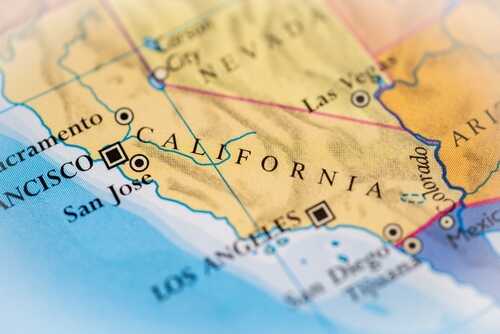
While scientists warn that two major Southern California faults are more “critically loaded” than at any time in 1,000 years, politicians and planners still act like business as usual is good enough.
Story Snapshot
- New research finds stress on key Southern California faults is at or above levels linked to past big quakes.
- Cajon Pass, just northeast of Los Angeles, may act as an “earthquake gate” that can turn one big quake into a megadisaster.
- Scientists stress this is not a date-specific prediction, but say the region is now in a “critically loaded state.”
- For families and property owners, the question is not panic, but how to prepare smartly while demanding real accountability.
What Scientists Are Really Saying About Stress On California’s Faults
A new peer-reviewed study led by researchers at the University of Hawaiʻi and the University of Bern reports that tectonic stress along parts of the southern San Andreas and San Jacinto fault systems has climbed to the highest levels seen in the last 1,000 years. Scientists built a physics-based model of how stress has built up over roughly a millennium, using trench data, radiocarbon dating, and historic records to track past big earthquakes and how the ground moved.
The numbers in this study are not small. On the Mojave South segment of the San Andreas Fault, just northeast of Los Angeles, the model estimates present-day Coulomb stress of about 2.8 megapascals, slightly above the 1.2 to 2.7 range seen before past major ruptures. On the nearby San Jacinto Bernardino segment, the stress is even higher, around 3.6 megapascals, compared with 1.2 to 2.9 in earlier pre-quake periods.[1] In simple terms, that means these zones are now more loaded than they were before some of the biggest known quakes there.
Cajon Pass: The “Earthquake Gate” That Could Decide How Bad It Gets
The study highlights a narrow corridor called Cajon Pass, where the two fault systems meet just northeast of the Los Angeles basin, as a critical “earthquake gate.”[1] This mountain pass is already a vital lifeline for the region’s freeways, rail lines, power lines, and fuel pipelines. Researchers found that when stress on the San Andreas and San Jacinto segments is similar, past quakes have sometimes broken across both faults, creating a much larger rupture and much wider damage zone.[3]
Historical examples show how important this “gate” can be. The huge Fort Tejon earthquake in 1857, estimated near magnitude 7.9, ripped along the San Andreas but appears to have stopped at Cajon Pass.[2] A large 1812 event, by contrast, likely involved both fault systems at once, meaning the gate was “open” and allowed a through-going rupture.[2] The new modeling suggests today’s stress pattern looks more like those joint-rupture times than quiet periods, raising concern that the next major event could also cross fault systems.[4]
High Stress Is Not A Calendar, But It Is A Clear Warning
Despite the strong wording about a “critically loaded state,” the scientists are careful about what they are not saying. They openly state that this is not an earthquake prediction with a date or even a short time window.[4] The study does not claim to know whether the next major rupture will happen this year, in ten years, or decades from now. Instead, it shows that stress conditions today match or exceed those seen before past big earthquakes, and that this makes certain large scenarios physically possible.
Stress along the San Andreas and San Jacinto faults in Southern California has reached the highest levels in 1,000 years, according to new research from the University of Hawaiʻi at Mānoa. For more information, click the link below https://t.co/ZjKDhdmtGK pic.twitter.com/0TycsMyEuS
— ABC7 News (@abc7newsbayarea) June 15, 2026
Other seismology work backs up the idea that stress and fault interaction matter for where quakes happen, while still warning that timing is extremely hard to forecast. Researchers in California and elsewhere have used similar Coulomb stress models to show that many earthquakes occur on faults that were already positively stressed by earlier events. That makes this new work an important input for risk planning and building codes, even if it cannot tell families which day “the Big One” will strike.
What This Means For Families, Freeways, And A Federal Government That Loves To Spend Elsewhere
For people living in the Los Angeles region, the real question is not whether to panic, but whether leaders will use this science to protect lives, homes, and key supply chains. A joint rupture running through Cajon Pass could hit freeways, rail lines, water lines, and energy corridors that move food, fuel, and goods into Southern California.[1] That would not just damage Hollywood and beachfront homes; it would hit working families, truckers, and small businesses across the region and even across the country.
Yet for years, Washington politicians poured trillions into pet projects, foreign adventures, and climate vanity schemes while basic hardening of critical infrastructure lagged. Californians have been lectured about gas stoves and “15-minute cities,” while aging aqueducts, power lines, and transportation corridors sit next to faults now known to be highly stressed. This new research puts hard numbers behind what many residents already feel: the risk is real, and priorities in the past were upside down.
Common-Sense Steps: Prepared Citizens And Accountable Officials
Because no one can stop plate tectonics, preparedness starts at home and in the community. Earthquake experts still repeat the same basic guidance: drop to hands and knees, take cover under sturdy furniture, and hold on until shaking stops.[1] Families can store water, food, and key medications, keep sturdy shoes by the bed, and plan safe meeting points if cell service goes down. Churches, local groups, and neighborhood watch networks can help organize drills and check on seniors after a major quake.
At the same time, conservative voters can demand that their tax dollars go first to real risk reduction, not to fringe social experiments. That means pressing local and state leaders to use the latest stress and fault-interaction data when they plan new highways, dams, and transmission lines, and when they retrofit older structures. It means asking why key lifelines still lack redundancy when scientists have been warning about Southern California’s faults for decades. High stress on these faults is not a prophecy, but it is a powerful reminder that serious nations take real physical threats seriously.
Sources:
[1] Web – Two SoCal faults haven’t experienced a major earthquake near LA in …
[2] Web – Cajon Pass and the Southern San Andreas Fault System
[3] Web – Tectonic stress levels along Southern California’s major fault lines …
[4] Web – Cajon Pass appears primed for a massive earthquake crossing two …