

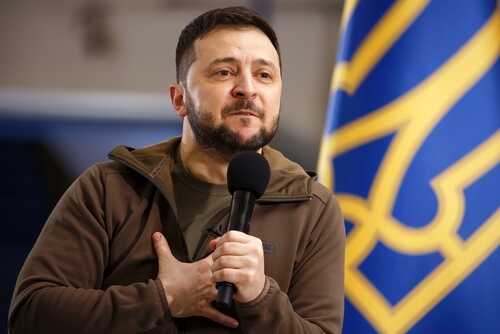
When a foreign leader’s angry “taunt” gets repackaged as a military threat, Americans should ask what’s real—and what’s propaganda meant to keep the money flowing.
Quick Take
- A viral claim says Ukraine’s Volodymyr Zelensky “threatened” Hungary’s Viktor Orbán after Budapest blocked a major EU aid package.
- Reporting confirms Zelensky publicly criticized and taunted Orbán on March 5, 2026, but available sourcing does not prove a literal call to attack Hungary.
- Hungary’s veto is tied to Brussels freezing large sums of EU funds over rule-of-law disputes and Orbán demanding those funds be released.
- The aid number is reported inconsistently—often €50 billion, sometimes framed closer to €90 billion—adding confusion to an already heated political fight.
What Zelensky Said—and What the Evidence Does (and Doesn’t) Show
March 5 coverage and a widely shared clip pushed the idea that Zelensky “casually threatened” to unleash Ukraine’s military on Hungarian Prime Minister Viktor Orbán. The underlying dispute is real: Hungary blocked a major EU financial package for Ukraine, and Zelensky responded with sharp public criticism. However, the most dramatic phrasing—implying an actual military threat—appears to be interpretive framing rather than a fully documented, verbatim call for violence in the cited reporting.
The verification problem is straightforward: summaries cite Zelensky’s taunts and pressure tactics, but a complete primary transcript is not provided in the research set, and the most sensational wording is amplified through commentary and video packaging. That matters because Americans have watched too many “narratives” get laundered into “facts” to justify the next spending surge or the next escalation. Here, the solid ground is the diplomatic clash; the leap is treating that clash as proof of a literal threat.
Hungary’s Veto: Frozen EU Funds, Unanimity Rules, and Leverage Politics
Hungary’s position is rooted in the EU’s internal power game. EU institutions have frozen significant funds destined for Hungary tied to rule-of-law disputes, while Budapest has used unanimity rules to slow or block Ukraine aid. In this round, Orbán withheld support for a package widely reported at €50 billion, tying any approval to the release of Hungary’s blocked money. That standoff has become a recurring feature of EU summits since Russia’s 2022 invasion of Ukraine.
EU leaders have tried multiple workarounds: applying political pressure, offering limited procedural concessions, and exploring ways to bypass a single-country veto. Prior episodes show how the EU can coax a reversal—sometimes by unfreezing partial funds—without fully resolving the underlying rule-of-law conflict. The result is a cycle where Brussels attempts to project unity, Hungary asserts national leverage, and Ukraine is left waiting on yet another multi-government negotiation over who pays, how much, and under what conditions.
Why the Aid Figure Keeps Shifting From €50B to €90B
One reason this story spreads so fast is the inconsistent price tag. Some coverage centers on €50 billion, while other summaries describe a broader €90 billion or frame it as military aid. The research indicates the higher number may reflect a mix of proposals, add-ons, or wider funding concepts discussed alongside the main package. Without a single primary document in the provided materials, readers should treat the higher figure as context-dependent rather than a settled, universally agreed amount.
That confusion is not trivial. Large, fast-moving foreign-aid debates often rely on headline numbers to shape public emotion. When figures inflate or blur, accountability suffers, and citizens—both in Europe and in the United States—lose track of what’s actually being authorized, what’s already pledged bilaterally, and what is stalled. For Americans who spent years watching inflation bite while Washington prioritized global commitments, the demand for clear, auditable numbers is common sense, not cynicism.
Escalation Risks: Rhetoric, “Ukraine Fatigue,” and EU Political Pressure
The broader context is a fraying consensus over how long the West can sustain Ukraine’s war effort at the same pace. Zelensky’s decision to confront Orbán publicly fits a strategy of applying maximum political pressure when funding stalls. EU diplomats and leaders have also signaled tougher measures against Hungary, including references to Article 7-style consequences, while portraying Orbán as an outlier blocking European solidarity. None of that requires a military threat to be politically combustible.
WATCH: Zelensky Casually Threatens to Unleash Ukrainian Military on Hungary's Viktor Orbán for Blocking €90 billion EU Aid https://t.co/D5INemnyqg #gatewaypundit via @gatewaypundit
— Ullie (@ullionweb) March 6, 2026
For conservative Americans, the key takeaway is to separate verified facts from emotionally charged packaging. The documented facts are that Hungary blocked aid, Zelensky criticized Orbán, and EU leaders are exploring ways around Hungary’s veto. The weak point is the claim that Zelensky literally urged troops to attack a NATO member. Without a clear, primary transcript in the research set, the strongest conclusion is rhetorical escalation in an ugly funding fight—not a confirmed operational threat.
Sources:
orban-blocks-eu-aid-for-ukraine-after-membership-talks-agreed
How EU leaders forced Viktor Orban to fold and support Ukraine aid
zelenskiy-taunts-hungarys-orban-for-blocking-aid-to-ukraine